I solve problems for businesses that don't have anybody on staff who builds software. Usually that means search across your own documents, a report that puts itself together on a schedule, or an agent that does a repetitive job and waits for you to approve it before anything goes out.
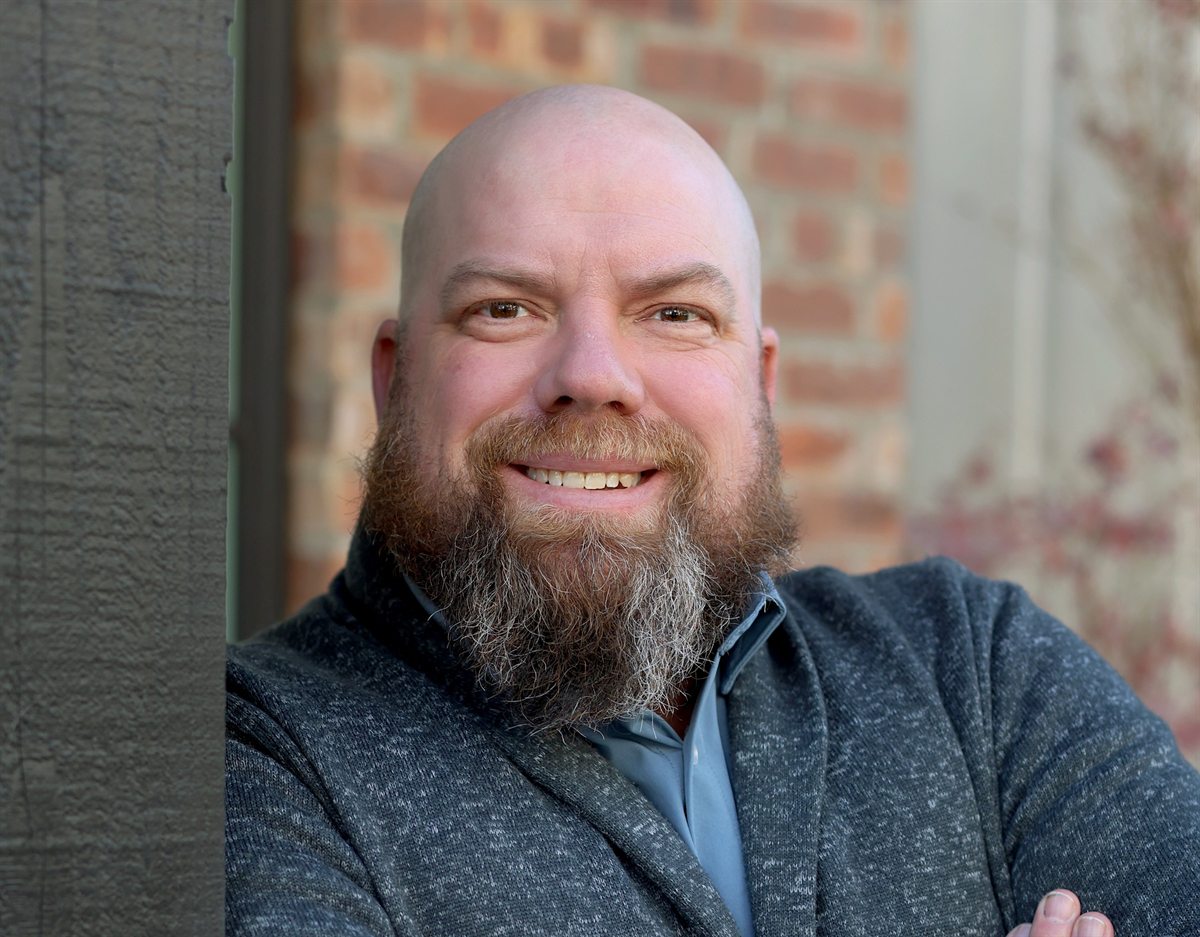
I'm Kit Applegate. I spent twenty years in the Coast Guard, a lot of it on spill response and inspections. Now I help small businesses solve problems and automate the work that keeps them from doing what they need to do. Most people think that work is just part of the job. I think that time could be spent on something better.
Services
What I build
Each one starts with a single job your team already does, and I build the tool around how they do it now.
If you don't know which one you need, start with the audit.
01
AI-assisted search
You ask a question in plain English and it finds the answer in your own SOPs, manuals and old job files, and shows you where it found it. If the answer isn't in there, it tells you that.
Built so far Two14, which answers incident command questions from the Coast Guard Incident Management Handbook and cites the page for every answer. Also a recipe search for my family that only answers from recipes we actually have.
02
Reports that run
The report somebody puts together by hand every week, pulled from spreadsheets, email or public data and sent out on a schedule.
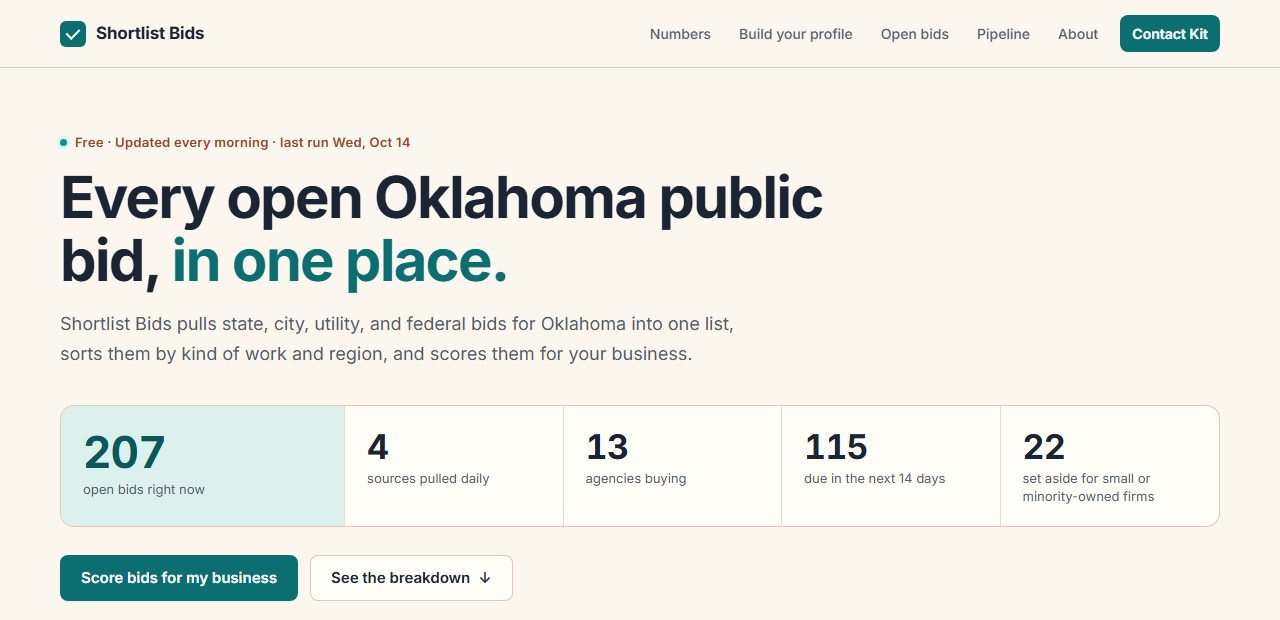
Built so far Shortlist Bids collects every open Oklahoma public bid each morning and posts them without anyone touching it.
03
Agents on a schedule
Small jobs that run on their own, like sorting incoming requests, drafting follow-ups or checking what changed since last week. They write drafts and somebody on your team approves them.
Built so far Every Sunday night a set of agents goes through the open tasks on my own projects and writes me a to-do list for the week.
04
Field-to-report paperwork
For spill response and other field crews: turning notes, photos and voice memos from the job into the first-hour record, the daily log and the closeout paperwork.
Work
Running right now
These are live, and you can open the public ones yourself.
Report that runs
Shortlist Bids
Every open Oklahoma public bid in one place. Contractors can check one page instead of a bunch of state, city, utility and federal sites.
For people stepping into a role on an incident. You pick your seat, like Finance Section Chief, and ask the way you'd ask an experienced section chief. Every answer is cited by page to the Coast Guard Incident Management Handbook, and you can tap a citation to read the page.
A recipe assistant for my family. It answers from our own recipes and nothing else.
Private, family only
Agents on a schedule
My own back office
Every Sunday evening a set of agents goes through the open tasks across my projects, closes the ones they can prove are done, and writes me a to-do list. I read it Monday and decide what happens next.
Sun 6:00 pm
Backlog triage
Reads the open tasks on up to 12 projects, closes what it can prove is done, and makes up to three small fixes on their own branches.
6:45 pm
To-do brief
Sorts every open task into needs me, ready to work, and waiting on someone else.
7:00 pm
Efficiency review
Looks for where effort is leaking across projects and follows up on last week's.
7:30 pm
Email
Turns the review into a PDF and emails it to me.
8:00 pm
Project research
Finds two or three real examples of people building each active project better.
Monday
Me
I read the briefs, merge or delete the fixes, and decide what's next.
The agents can't merge, push, deploy or delete anything. I do that part.
How it works
Three steps, and you know the price before I start
1
Audit
A short, paid look at your documents and how the work gets done now. You get a one-page plan you can keep whether you hire me for the rest or not.
2
Build
I build one tool on your real documents and test it on real work. Scope and price are set before I start.
3
Care
If you want, I keep it running month to month and change it when your work changes. If you don't, it's yours to run.
Agents draft, a person sends.
Nothing an AI writes goes to a customer, a regulator or anybody's inbox until a person has read it and said yes. Everything I build works that way.
Who it's for
A good fit
Small businesses with nobody on staff who builds software
Knowledge that lives in PDFs, binders or one person's head
A report somebody puts together by hand every week
Field and compliance work, like spill response, inspections and regulated facilities
Who it's not for
Not a fit
Training AI models from scratch
Full apps or software platforms
Replacing your staff
Anything that needs a research lab
Kit Applegate
About
About me
I spent twenty years in the U.S. Coast Guard and retired in 2024. A lot of that time was spill investigations, response planning and inspecting regulated facilities, and I taught more than 500 students at Training Center Yorktown.
Since then I've been learning networking and building software. Andrej Karpathy said the hottest new programming language is English, and that's how I build. I describe what I want in plain English and work it out with Claude, ChatGPT, Grok or whatever AI tool fits the job. I finished NexGenT's Full Stack Network Associate program and their Full Stack Network Projects, and I'm working on my CCNA. I also run a four-computer cluster at home.